
SURAYYN SELVAN
Bachelor of Science (Honors) Architecture E-Portfolio

Our documentary on Shigeru Ban
Project 1:
Famous People Familiar Faces
[Diagrammatic Abstraction]
In groups of 5, we were required to produce a short documentary in the form of a video about an architect which we were given, Shigeru Ban - The Paper Architect. We were then instructed to select one of his projects and produce the necessary orthographic drawings. Once the drawings were done, we were to analyse the chosen building, in our case we chose The Paper Concert Hall, and produce a diagrammatic analysis of the building in the form of drawings which were later translated into 6cm X 6cm X 6cm conceptual models. Through this assignment, I was able to understand how the composition of architectural elements make up a space. I am also able to identify these elements and translate them into conceptual models.
The main theme of this module is "user and context" and designing in response to the site as well as the user. Through this module, I was able to strengthen my architectural vocabulary by highlighting the architectural elements and principle's of design. Besides that, my ability to abstract ideas and convert them into 2D drawings and 3D models have improved tremendously through this module. This module has also allowed me to take into acount the user and build to their special requirements while understanding the context of the site given. Finally, I am able to understand the basic design processes and communicating these ideas through orthographical drawings, sketches and study models.
Architecture Design Studio 2
ARC1126


Our documentary's storyboard


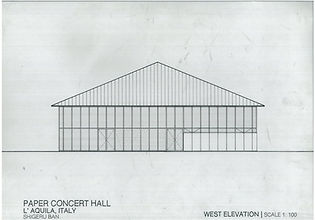


Our orthographic drawings of The Paper Concert Hall
From left to right, top to bottom:-
1. Cover Page
2. Site Plan (scale 1:200)
3. Floor Plan (scale 1:100)
4. North Elevation (scale 1:100)
5. South Elevation (scale 1:100)
6. East Elevation (scale 1:100)
7. West Elevation (scale 1:100)
8. Section A-A (scale 1:100)
9. Section B-B (scale 1:100)


Mock Up Model - Plan to Section
Mock Up Model - Unit to Whole
Mock Up Model - Repetitive to Unique
Mock Up Model - Geometry


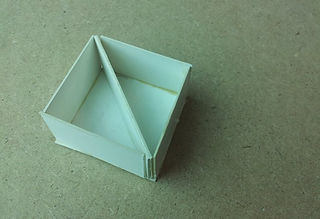
Mock Up Model - Structure
Mock Up Model - Balance and Symmetry


Model - Geometry and Massing
Model - Temporary Structure and Unit to Whole


Model - Repetitve to Unique and Points, Lines, Planes
Model - Balance and Symmetry


Model - Plan to Section
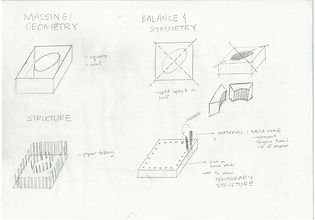


Our diagrammatic analysis sketches
Project 2:
Site Analysis and Abstraction
A site was given to us for our second project which was in Pantai Kerachut, Penang. Within Pantai Kerachut, there were two sites in a 200m X 100m area, Site A - The Beach side towards the Hillside and Site B - The Merimitic Lakeside. My group was given Site A. Once on site, we were required to collect the necessary and sufficient data to fulfill our site analysis requirements. Within our group, we were divided into different subject areas to focus on such as Site Plan, Materiality, Landscape etc. During the site visit, we were also required to take pictures of things that would be our source of inspiration for our next projects. After the site visit, we were to produce a detailed site analysis report on the site. We also had to filter out 4 photos from our collection to abstract. An abstraction exercise was carried out to produce a free hand 2D postcard drawing. Later on these drawings were further abstracted into 3D conceptual models.
Through this assignment, I was exposed to the teamwork required to conduct a site analysis report. I was also able to understand the processes of conducting a site analysis and was made aware of site specific designs. Through the abstraction processes, I was able to understand the basics of design and apply them in my designs. I was also exposed to natural architectural configurations in Pantai Kerachut which aided in my design processes. My understanding of user specific designs have improved through this assignment as well.
Our Pantai Kerachut Site Analysis Report


The four pictures I was most inspired by

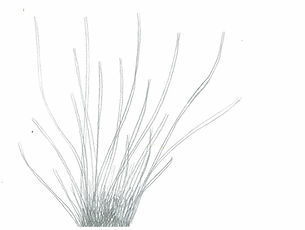


The abstraction of the four pictures in the form of drawings


The abstraction of the four drawings in the form of conceptual models
Project 2A:
Bay Watch
As a pair, we were required to design a lookout tower for the rangers in charge of Pantai Kerachut. There were four types of towers we were allowed to design :- a) a coastal watch tower b) turtle watching tower c) a camp watch tower d) bird watching tower . The coastal watch tower and the turtle watching tower would be located at the beach side, the camp watch tower would be located in the campsite and the bird watching tower would be on the hillside. My partner and I chose to design a camp watch tower. The design of the tower would have to be based off of the four conceptual models we created. We combined our conceptual models to produce our design. Our design would be based off randomisation, lines and density.
Through this assignment, my performance in a team has greatly improved as I was able to share and communicate ideas with my partner. Besides that, I was able to generate design ideas through architectural conceptualization paying attention to the user's requirements as well as designing in response to the site. Furthermore, I was able to generate interesting narratives to support our design based off the site as well as through our design process.


Top to bottom, Left to right:-
1. My partner's conceptual model based on focus and density
2. My conceptual model based on randomisation and lines
3. My partner's conceptual model based on density and lines
4. My conceptual model based on lines and density


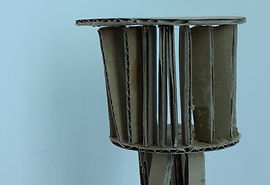


The progress of our mock up models based off our conceptual models


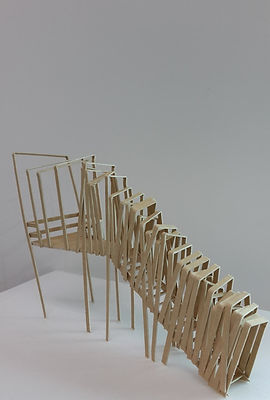
Our final model "The Merawak Lookout Tower"
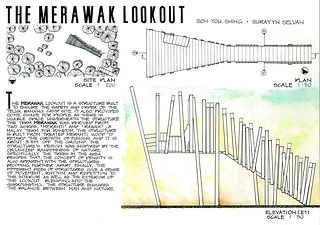


Our presentation board for the tower
Project 2B:
Pantai Kerachut Retreat
Individually, we were required to design a retreat home in pantai kerachut for the ranger that we designed the watch tower for. This home would be used by the ranger for a short period of time and therefore would have to function as a habitable architectural space that would function as a living area, dining area, cooking area, cleansing area and storage area within a built up space of 150 square meters. The design would have to have a symbiotic relationship between the nature of the landscaping as well as the activity of the user.
My design was based off two of my photos and conceptual models. I underwent several design changes to get to my final design and this enabled me to widen my design knowledge. Through the tutorial sessions, I was also given very good advice related to generating designs as well as ensuring the suitability of the spaces.
Through this assignment, I was able to understand the notions of conceptualization and design processes in architectural designs. I was also able to understand the requirements of user specific designs as well as site responsive designs. My knowledge on anthropometrics have improved as well because I had to find a suitable amount of room space for the user depending on the function of the spaces. My understanding of the orientation and spatial organization of spaces have also been honed drastically.


The two pictures my design was inspired by
The two conceptual models my design was inspired by


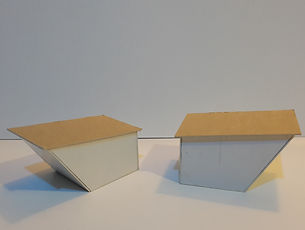


All my study models arranged in order of their design inception


My final model - Pantai Kerachut Retreat


My presentation boards